
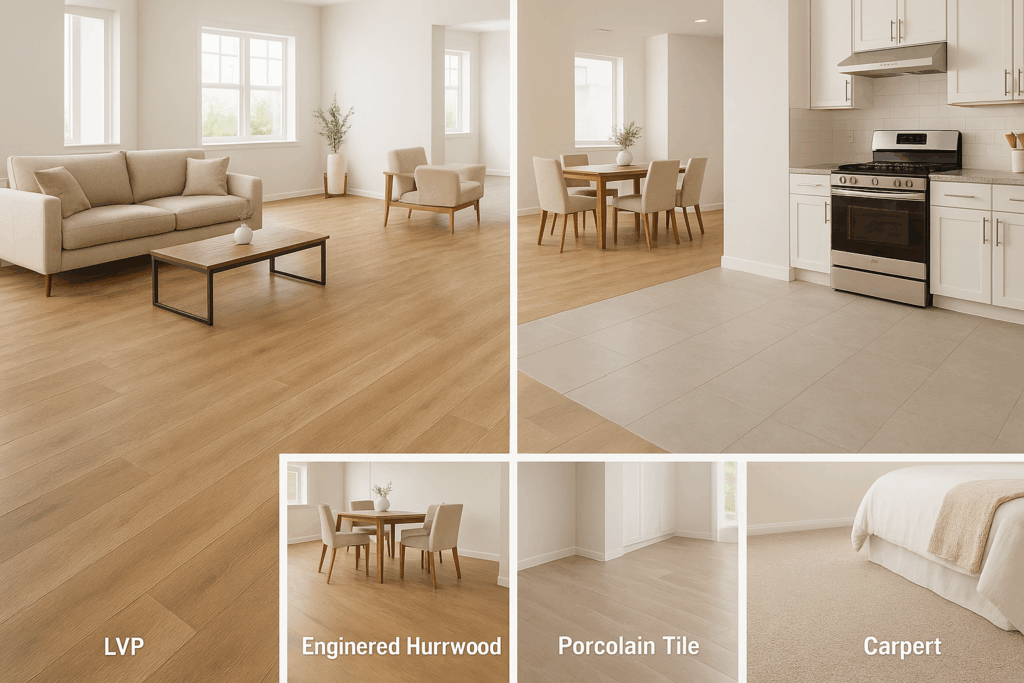
Seattle’s climate teaches every homeowner an important lesson: your floors are the hardest-working surfaces in your home. They face endless rain, muddy boots, wet pets, dropped coffee mugs, kids’ toy cars, and the occasional “indoor adventure” when someone forgets to take off their shoes.
After nearly two decades of installing every type of floor across Snohomish and King Counties — from the busy family kitchens of Edmonds to the waterfront homes of Mukilteo — I’ve learned which materials truly last here, and which just look good in a showroom.
Let’s explore the six flooring options that consistently deliver beauty, comfort, and durability for our Pacific Northwest lifestyle.
1. Luxury Vinyl Plank (LVP) – The Pacific Northwest Champion
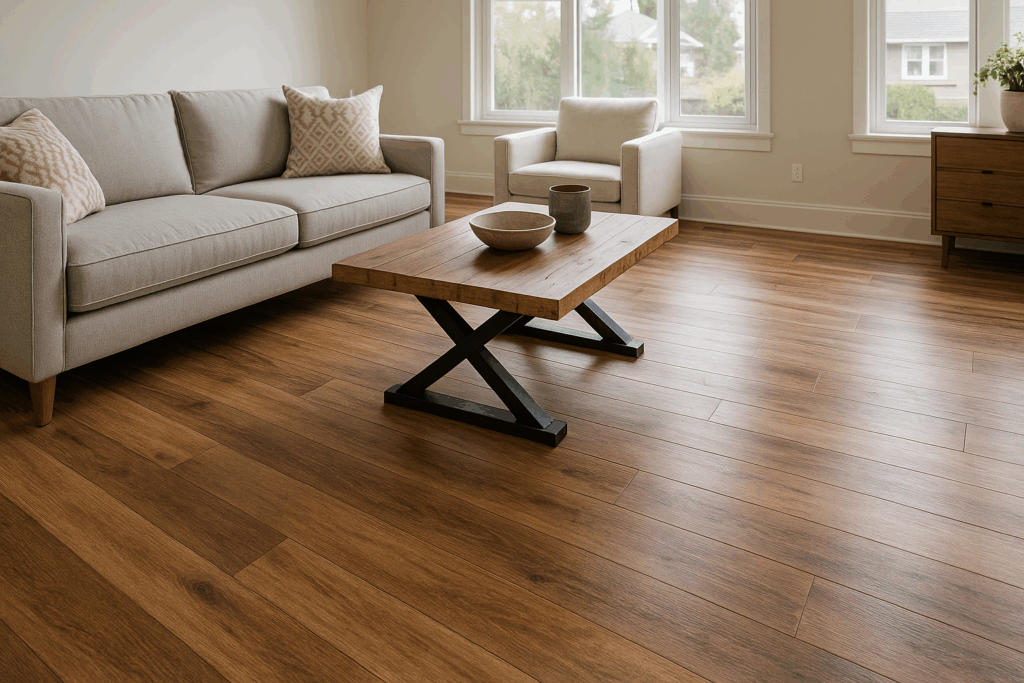
What it is:
LVP is like the modern SUV of flooring — stylish enough for a magazine spread, tough enough for real life. Each plank has a high-resolution printed layer that mimics wood or stone, topped with a thick, transparent wear layer for protection. Beneath that is a rigid, fully waterproof core that refuses to swell, warp, or crack, even when faced with Seattle’s soggiest months. Many lines also include an attached underlayment for comfort and noise reduction.
How it’s made:
The print technology has evolved so much that some LVP floors have texture you can feel — knots, grain, or even the subtle ripple of a hand-scraped plank. The core, often made from stone polymer composite (SPC) or wood polymer composite (WPC), gives the planks stability and strength.
Where it shines:
If your family tends to track in rain, snow, or sand from Lake Stevens trips, LVP is your best friend. It’s ideal for kitchens, bathrooms, basements, and open-plan living spaces that need one continuous, low-maintenance surface.
Pros:
- Fully waterproof — puddles are no problem
- Scratch-resistant, kid- and pet-friendly
- Softer and warmer underfoot than tile
- Wide variety of colors and patterns
Cons:
- Very cheap lines can look fake or plasticky
- Needs a perfectly flat subfloor for long-term stability
Pro tip:
Don’t skimp on prep — smooth, clean subfloors are key. For open spaces, use wide planks for a modern, continuous look.
2. Engineered Hardwood – Real Wood With a Fighting Chance
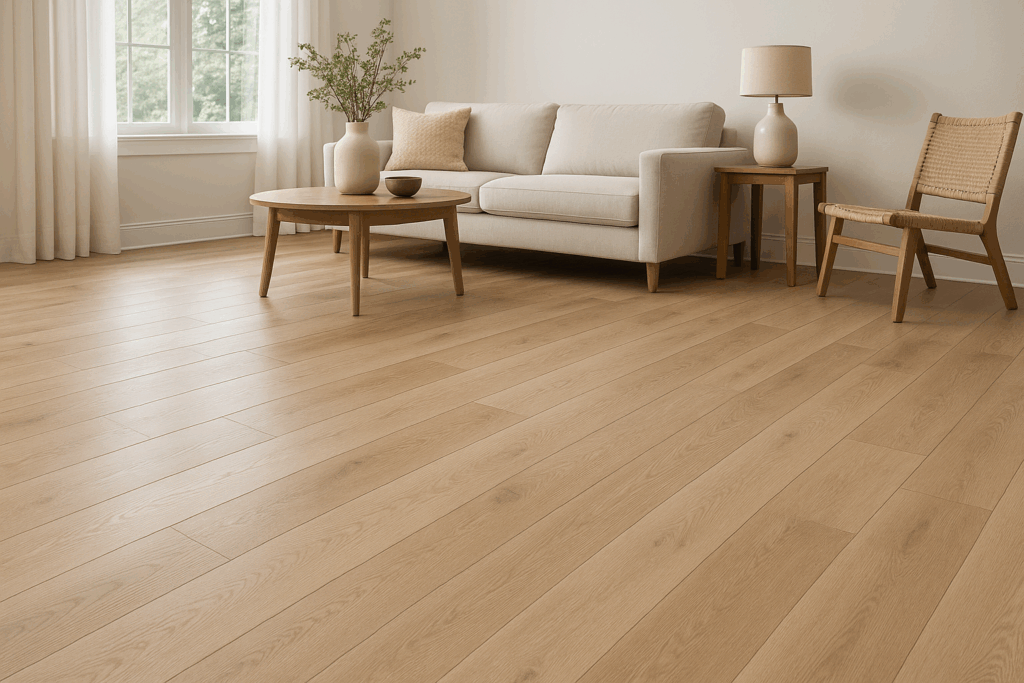
What it is:
Engineered hardwood is real wood through and through — but smarter. Instead of a single solid plank, it has a surface layer of genuine hardwood (the veneer) bonded to multiple cross-laid layers of high-quality plywood or HDF. This structure dramatically reduces seasonal expansion and contraction, making it more stable in our wet-to-dry climate.
The star of 2025:
Natural European oak with a matte oil finish. Picture a warm, honey-toned plank with visible grain and subtle knots — it feels timeless and organic, perfect for both modern and traditional interiors.
How it’s made:
The veneer is sliced or sawn from real oak logs, giving each board unique character. The core layers are stacked in alternating grain directions, much like a fine piece of furniture, for dimensional stability.
Where it shines:
Living rooms, dining rooms, bedrooms, and home offices. Anywhere you want the prestige and warmth of hardwood but with better performance against humidity changes.
Pros:
- Real wood beauty and feel
- More stable than solid hardwood
- Can be refinished depending on veneer thickness
Cons:
- Not waterproof — wipe spills quickly
- Higher cost than laminate or LVP
Pro tip:
Acclimate your planks for at least 48 hours before installation. Maintain indoor humidity between 35–55% year-round for long-term stability.
3. Porcelain & Ceramic Tile – Unshakable in Wet Zones
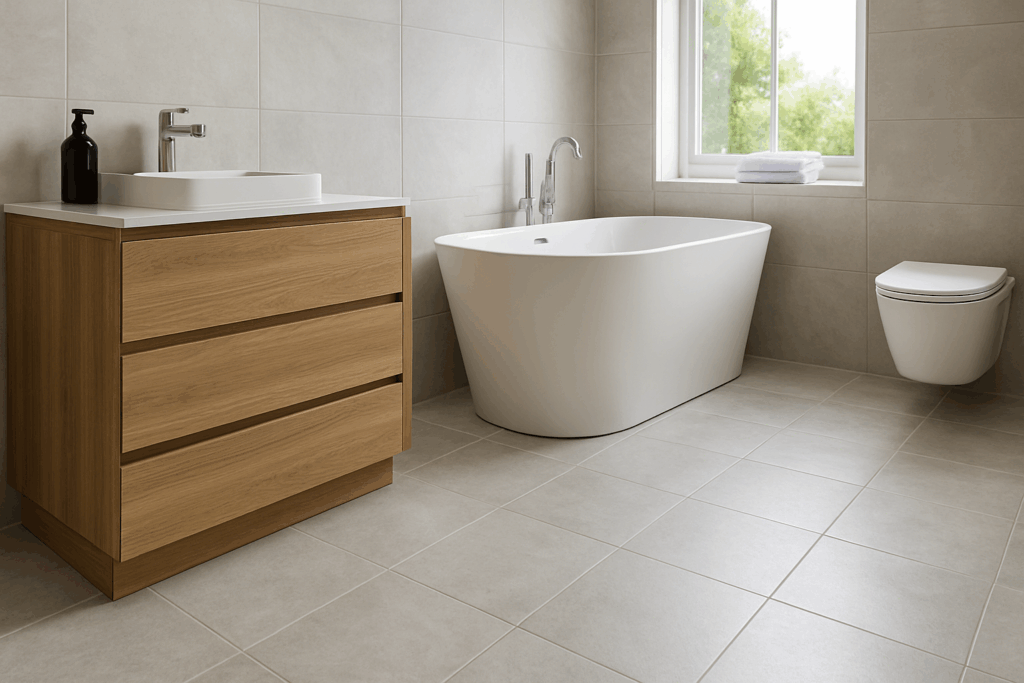
What it is:
Tile is one of the oldest flooring materials still in use — and for good reason. Porcelain, fired at higher temperatures than ceramic, is denser, harder, and almost completely waterproof. Ceramic offers a slightly softer, more budget-friendly option with endless design choices.
How it’s made:
Clay is shaped into tiles, glazed with color or patterns, and fired in a kiln until it becomes rock-hard. Porcelain’s higher temperature firing makes it more impervious to water and more resistant to chipping.
Where it shines:
Bathrooms, laundry rooms, kitchens, mudrooms, and entryways — anywhere you expect water, mud, or heavy use. In 2025, large-format tiles and ultra-thin grout lines are on trend, creating sleek, seamless floors.
Pros:
- 100% waterproof when properly installed
- Resistant to scratches, stains, and fading
- Works well with radiant floor heating
Cons:
- Cold underfoot without heating
- Can be slippery when wet unless you choose textured finishes
- Requires precise subfloor prep
Pro tip:
Use an uncoupling membrane over wood subfloors to prevent cracks from seasonal movement. Consider stain-resistant grout for easier maintenance.
4. Waterproof Laminate – A Budget Hero
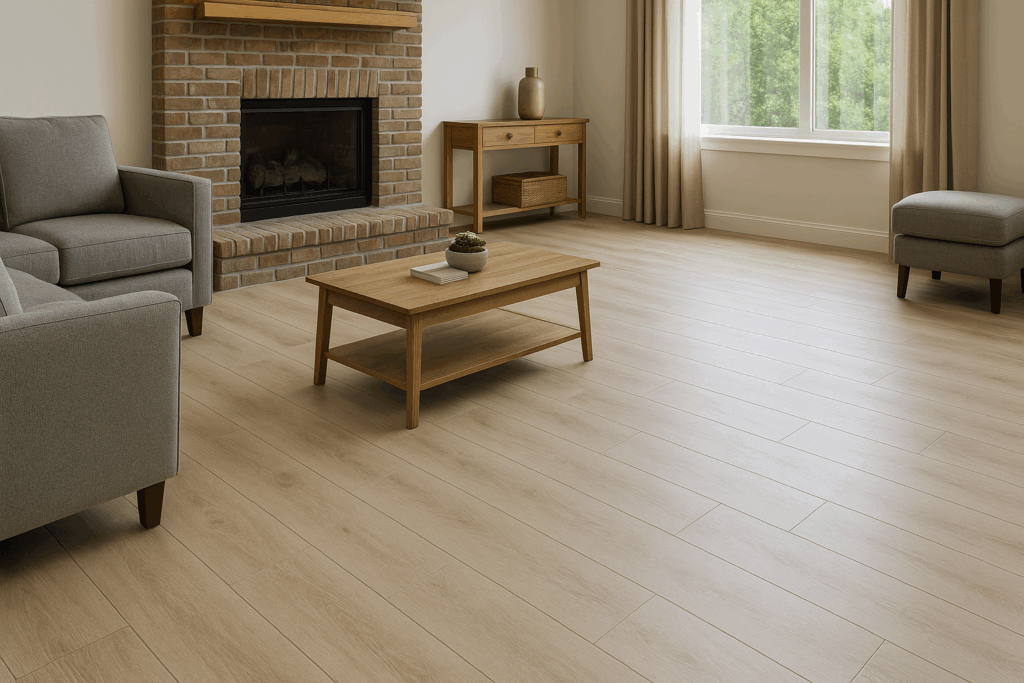
What it is:
Waterproof laminate is the reinvention of a 90s favorite. The core is a high-density fiberboard (HDF) that’s treated and sealed to resist water, topped with a tough, textured wear layer that mimics wood or stone. While older laminate swelled and failed from minor spills, today’s versions can handle everyday moisture without damage.
How it’s made:
Advanced imaging creates realistic visuals, while embossing adds texture to match the design. The locking edges are coated to block water intrusion.
Where it shines:
Busy households that want the look of hardwood at a lower cost. Great for living rooms, hallways, and bedrooms.
Pros:
- More affordable than hardwood and premium LVP
- Excellent scratch resistance
- Wide style variety
Cons:
- Not immune to flooding or standing water
- Louder underfoot without underlayment
Pro tip:
Always install over a moisture barrier in ground-level spaces. Seal cut edges in kitchens or bathrooms for extra protection.
5. Cork Flooring – Comfort and Quiet
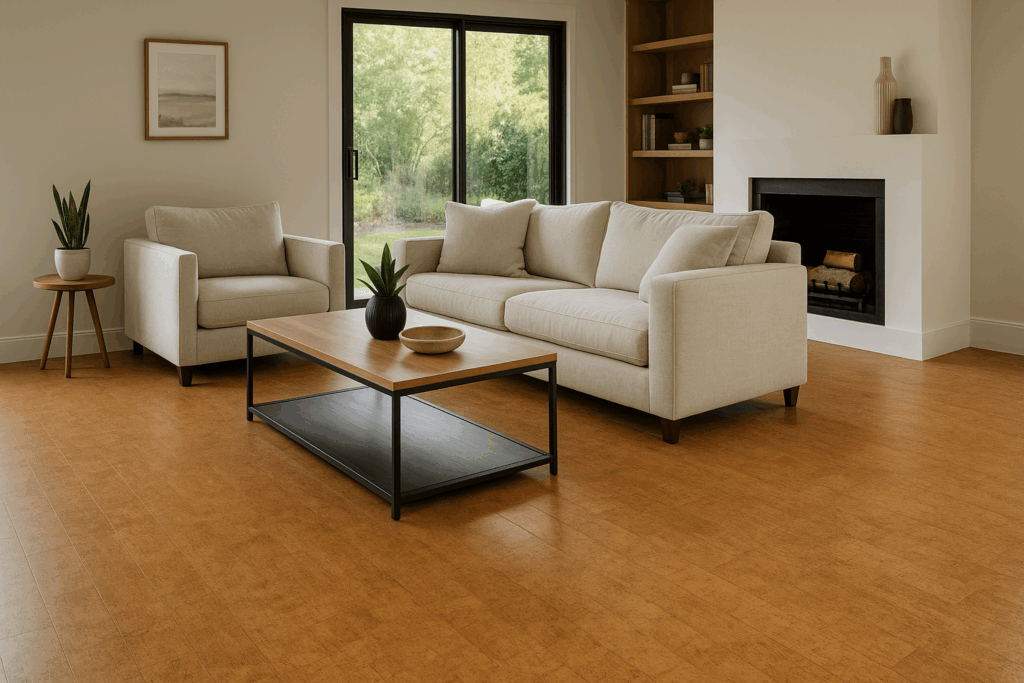
What it is:
Cork comes from the bark of cork oak trees — harvested without cutting down the tree, making it one of the most eco-friendly flooring choices. The bark is ground, mixed with resins, pressed into sheets, and cut into planks or tiles.
How it feels:
Soft and slightly springy underfoot, cork reduces joint strain and muffles sound, making it perfect for upstairs rooms or apartments.
Where it shines:
Bedrooms, nurseries, home offices, yoga studios — any place where warmth, comfort, and quiet matter most.
Pros:
- Renewable and sustainable
- Naturally resistant to mold, mildew, and pests
- Soft and warm underfoot
Cons:
- Must be sealed to handle moisture
- Can dent under heavy furniture
- Fades with direct sunlight
Pro tip:
If installing in kitchens or other potential splash zones, choose a factory-finished waterproof cork or add multiple coats of sealant after installation.
6. Carpet – Comfort That’s Hard to Beat
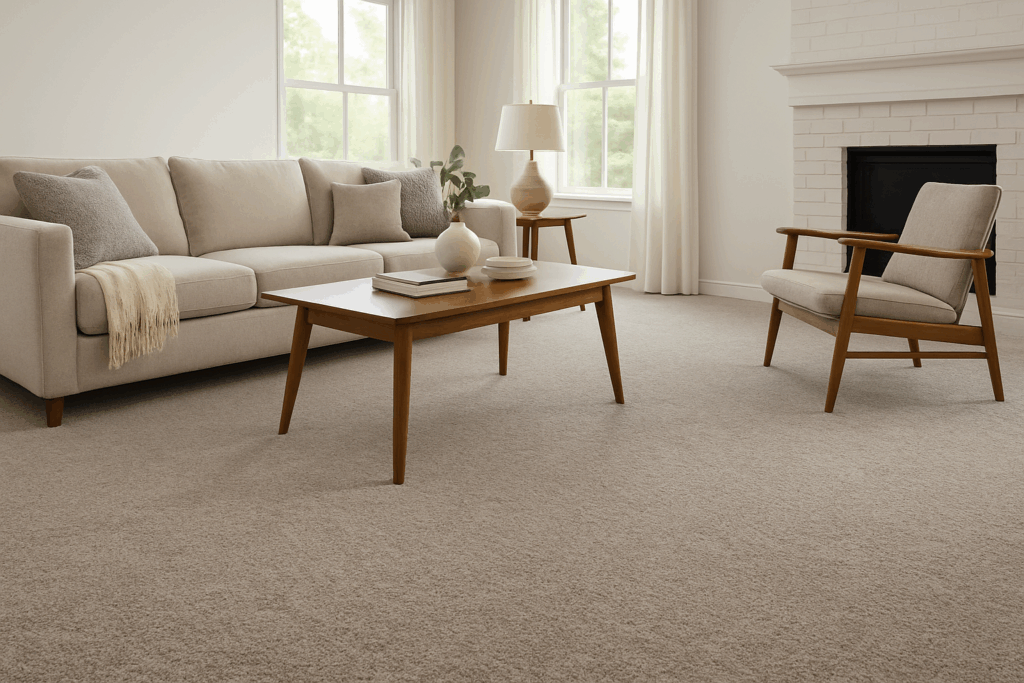
What it is:
Carpet is a textile floor covering made by tufting fibers (nylon, polyester, wool, or blends) into a backing and then adding padding underneath. It’s the flooring equivalent of a warm blanket, turning rooms into cozy retreats.
Types:
- Plush cut pile for a luxurious, soft feel in bedrooms.
- Berber loop for durability in high-traffic areas.
- Patterned styles for a designer touch.
Where it shines:
Bedrooms, living rooms, family rooms, and staircases. Anywhere you want warmth, sound absorption, and comfort underfoot.
Pros:
- Soft, warm, and quiet
- Wide range of colors and patterns
- Cost-effective for large spaces
Cons:
- Can trap allergens without regular cleaning
- Susceptible to staining if spills aren’t treated quickly
Pro tip:
Use an 8-pound pad with a moisture barrier for added comfort and durability. Vacuum regularly and schedule deep cleaning every 12–18 months.
Final Thoughts
The best flooring for your home depends on where it’s going, how you live, and what matters most to you. If you have pets and kids, LVP might be your best friend. If you’re after timeless beauty, engineered hardwood is hard to beat. For rooms where water is a constant, tile will give you peace of mind.
At Evergreen Flooring and Remodeling LLC, we’ve walked homeowners through these decisions countless times — weighing the pros and cons, looking at real samples in their lighting, and matching materials to their lifestyle.
📞 Call us at 425-286-5231 or visit EFRSeattle.com to set up your free in-home consultation. Let’s choose a floor you’ll love living with — rain or shine.